How much does an ecommerce website cost in 2026? With new technology and fiercer competition, knowing your true ecommerce website cost is more important than ever.
UK businesses often struggle to budget for a new or redesigned online shop. Costs can quickly spiral if you do not understand what drives them.
This guide will show you how to avoid overspending and make informed decisions. You will learn what affects the final price, how to spot hidden charges, and how to use smart tools like Avantiy for a competitive edge.
We will break down every aspect: setup costs, ongoing fees, platform comparisons, hidden expenses, budgeting steps, and practical tips to help you succeed online.
The Real Cost Breakdown of Ecommerce Websites in 2026
Understanding the true ecommerce website cost in 2026 means looking beyond the surface. Every element, from your domain name to ongoing marketing, impacts your budget. Let us break down each major cost area, so you can plan confidently and avoid surprises.

Domain, Hosting and SSL Certificates
A domain name is your digital address. In 2026, annual registration typically ranges from £8 to £25. Hosting is essential. Shared hosting costs £5 to £20 per month, while managed or cloud options start at £20, rising above £100 for high performance. SaaS platforms like Avantiy or Shopify bundle hosting and SSL, streamlining your ecommerce website cost.
SSL certificates are a must for PCI compliance. Let’s Encrypt provides free SSL, but premium certificates range from £50 to £200 yearly. With 100% of ecommerce sites requiring SSL, it is non-negotiable. For full transparency, review Ecommerce website pricing plans to compare what is included with different platforms.
Ecommerce Platform & Software Fees
Your choice of platform is a major driver of ecommerce website cost. Subscription-based SaaS builders, such as Shopify (£25–£299/month), Wix, Avantiy, and Squarespace, offer predictable fees. Avantiy lets you build for free and only pay to publish. Open-source platforms like WooCommerce and Magento are free to install, but plugin and hosting costs vary.
Transaction fees, usually 1% to 3% per sale, add up quickly. SaaS options provide updates and support in the monthly price, while self-hosted platforms require manual management. Shopify’s all-in-one monthly rate simplifies budgeting, but WooCommerce’s flexibility can mean fluctuating expenses. Consider your long-term needs when choosing your platform.
Website Design: Templates vs. Custom Builds
Design impacts both first impressions and your ecommerce website cost. Templates or pre-made themes start free and go up to £200+, making them a budget-friendly choice for new businesses. On the other hand, custom builds from agencies range from £2,000 to over £20,000, reflecting branding, user experience, and advanced functionality.
A slick design boosts credibility. Users judge your site in just 50 milliseconds. Pre-built Shopify or Avantiy themes suit startups, while established brands often invest in unique, bespoke designs. Weigh the cost against expected return, as strong branding can significantly improve conversion rates.
Development & Integrations
Development costs vary widely. Simple sites might need just £1,000, but advanced ecommerce features, such as product configurators or custom integrations, can push the ecommerce website cost to £30,000 or more. Integrating with payment gateways, CRMs, accounting software, and marketing tools is often essential.
Platforms like Avantiy offer built-in integrations, reducing complexity. In contrast, Magento or WooCommerce may require bespoke API development. UK agencies typically charge by project or hourly, so request detailed quotes. Flexibility is a benefit of custom work, but it comes with higher upfront costs.
Ongoing Maintenance, Support & Updates
Budgeting for ongoing care is crucial to control your ecommerce website cost. Maintenance, support, and updates typically run £30 to £200+ per month. This covers security patches, bug fixes, plugin and theme updates, and regular backups.
SaaS platforms, including Avantiy and Shopify, handle updates and support as part of the subscription. Self-hosted sites require manual intervention or paid maintenance contracts. Some businesses opt for annual support packages, while others pay ad hoc hourly rates. Neglecting maintenance can lead to security risks and unexpected downtime.
Marketing, SEO & Business Costs
Driving traffic and sales is an ongoing ecommerce website cost. SEO setup fees range from £500 to £5,000+, with ongoing work costing £250 to £1,000 monthly. Email marketing tools cost £10 to £100 per month, and paid advertising can quickly increase spend.
Payment processing fees, usually 1.4% to 3.5% plus 20p to 50p per transaction, further impact margins. Shopify and Avantiy include built-in SEO tools, while WordPress sites may require extra plugins. Continuous SEO investment is vital for visibility and growth in the competitive UK market.
Key Factors Influencing Ecommerce Website Costs
Understanding what drives your ecommerce website cost is essential for smart budgeting and future growth. Costs can vary widely depending on your choices at each stage. Here, we break down the key factors that shape your overall spend.

Project Scope and Required Features
The first and most significant driver of your ecommerce website cost is the project scope. Are you launching a minimum viable product with just the essentials, or aiming for a full-featured online store with advanced capabilities?
Basic features like product catalogues, shopping carts, and secure checkouts are must-haves. However, if you want product configurators, subscription models, or a multi-vendor marketplace, expect to see your ecommerce website cost rise. For example, a simple clothing store will have a much lower cost than a complex B2B portal. More features also increase ongoing maintenance and update fees, so be clear on your priorities from the outset.
Platform Choice: SaaS vs. Self-hosted
Your choice of platform plays a huge role in the total ecommerce website cost. SaaS options like Avantiy, Shopify, and Wix offer predictable monthly fees, built-in hosting, and less technical overhead. These platforms are popular among UK small businesses for their simplicity and fast setup.
Self-hosted solutions such as WooCommerce or Magento provide greater flexibility and control, but they come with higher upfront costs and increased responsibility for hosting and maintenance. When comparing, consider not only the initial outlay but also the long-term costs and the technical expertise needed. According to the Comprehensive Guide to Ecommerce Website Development Costs in the UK, platform choice can be one of the biggest cost differentiators.
Design and Branding Requirements
Design is about more than just looks, it directly affects your ecommerce website cost and conversion rates. Choosing a free or paid template is cost-effective, but may limit your branding. Custom designs, while more expensive, offer a unique brand experience and can significantly improve user trust.
For instance, start-ups might opt for pre-built templates, while luxury brands often invest in bespoke agency designs. Remember, 75 percent of users judge a site’s credibility by its design. Investing in professional branding can double or even triple your initial budget, but may yield higher returns in loyalty and sales.
Content Creation and Product Data Migration
Populating your new site with product descriptions, images, and data is often underestimated in the ecommerce website cost. If you have hundreds or thousands of products, the time and effort required to upload and optimise content can be considerable.
Migrating data from an old platform, such as moving 1,000 products from Magento to Shopify, adds complexity and cost. You can do this in-house to save money, but many businesses outsource for accuracy and speed. For large catalogues, expect to add £500–£5,000 or more to your total spend.
Integrations and Business Process Automation
Integrating your ecommerce platform with accounting, CRM, ERP, or marketing automation tools can streamline your operations and save money in the long term. However, these integrations can add to your upfront ecommerce website cost.
For example, automated order sync with Xero or marketing integration with Mailchimp may be available as built-in features on Avantiy, but could require custom API work on platforms like Magento. Off-the-shelf integrations are cheaper, while custom solutions offer more flexibility at a higher price. Over 40 percent of ecommerce businesses automate at least one major process to improve efficiency.
Security, Compliance, and Scalability
Security and compliance are non-negotiable for any online shop. PCI DSS and GDPR requirements are essential for protecting customer data and building trust. SaaS platforms such as Avantiy and Shopify handle most compliance and security updates for you, reducing the risk of costly mistakes.
Self-hosted solutions require manual setup and regular updates, which can increase your ecommerce website cost and risk of non-compliance. Planning for scalability is also vital. If your store grows quickly, you need a platform and infrastructure that can handle increased traffic without expensive upgrades or downtime. Compliance failures can result in fines, lost reputation, and unexpected expenses.
Comparing Popular Ecommerce Platforms in 2026
Selecting the right ecommerce platform is a pivotal step in managing your ecommerce website cost. With so many options available, UK businesses need a clear, up-to-date comparison to ensure every pound spent delivers value and growth.
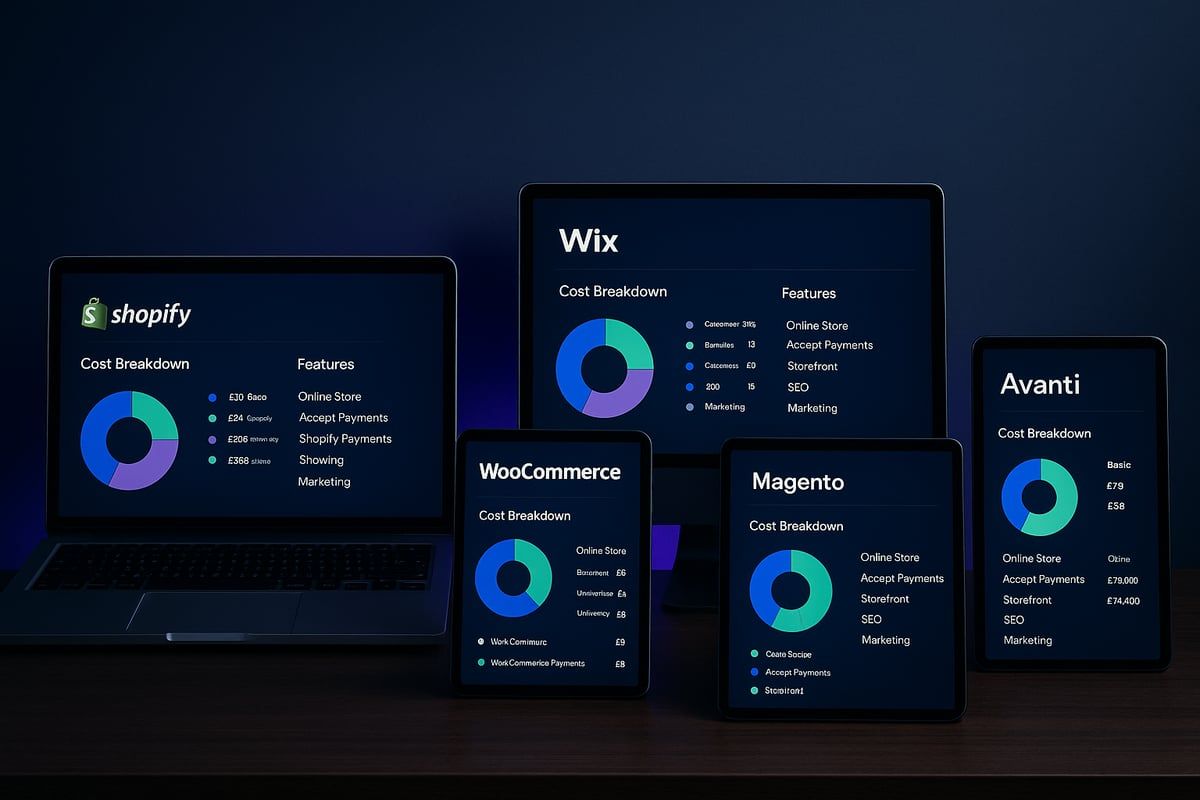
Shopify, Wix, Squarespace, WooCommerce, Magento & Avantiy
The UK market is packed with ecommerce solutions, each offering unique strengths. Shopify is renowned for retail ease of use, while Wix and Squarespace appeal to creative SMEs with intuitive drag and drop tools. WooCommerce and Magento give unparalleled flexibility for those who want control, but require more technical skill.
Avantiy stands out for its AI-driven, all-in-one approach, combining design, SEO, and ecommerce features under one roof. This can dramatically simplify your ecommerce website cost planning, especially for businesses seeking scale and automation. For a detailed look at platform capabilities and features, see the Ecommerce website solutions overview.
Cost Comparison Table: Setup, Monthly, and Hidden Fees
Understanding total ecommerce website cost means looking beyond headline prices. Here is a comparison of typical costs for a small UK business:
| Platform | Setup Cost | Monthly Fee | Transaction Fees | Design/Plugin Costs | Hidden Fees |
|---|---|---|---|---|---|
| Shopify | £0–£200 | £25–£299 | 1.5%–2% | £0–£200+ | Apps, add-ons |
| Avantiy | £0 | £39–£129 | 1% | Included | None/Low |
| Wix | £0–£100 | £13–£22 | 2% | £0–£100+ | Apps, bandwidth |
| WooCommerce | £0–£1,000+ | £5–£100+ | 1.4%–3.5% | £0–£500+ | Hosting, plugins |
| Magento | £2,000+ | £50–£500+ | 1.4%–3.5% | £500–£5,000+ | Maintenance |
Costs can escalate quickly if you require advanced features, custom integrations or high traffic capacity. Always review total ownership costs before making a decision.
Pros and Cons for UK Small Businesses
Every platform impacts your ecommerce website cost differently. Here are some pros and cons to consider:
Shopify
- Pros: Fast setup, strong support, reliable hosting.
- Cons: App/add-on fees, less flexibility for unique designs.
WooCommerce
- Pros: Customisable, open-source, wide plugin library.
- Cons: Requires hosting, ongoing maintenance, technical skill.
Avantiy
- Pros: AI-powered setup, all-in-one pricing, UK-focused support.
- Cons: Newer platform, less third-party ecosystem.
Squarespace/Wix
- Pros: Simple design tools, affordable for small catalogues.
- Cons: Limited scalability, transaction fees, fewer advanced ecommerce features.
Assess your needs and technical comfort level to keep your ecommerce website cost under control.
AI-Powered Website Builders: The Avantiy Advantage
AI-driven builders like Avantiy are changing the ecommerce landscape in the UK. By automating design, SEO, and store setup, these platforms can cut build time by up to 50 percent. This not only reduces your upfront ecommerce website cost but also streamlines ongoing management.
Avantiy offers built-in tools for payments, marketing, and customer management. For small businesses, this means fewer third-party subscriptions and less need for technical staff. You can launch a professional store in hours, not weeks, with the confidence that compliance and updates are handled automatically.
Case Studies: Real-World Cost Scenarios
Let us look at three UK businesses and their ecommerce website cost journeys:
- Startup: Uses Avantiy, launches a store for £39/month with no setup fee, benefiting from AI content and design.
- Growing retailer: Migrates from WooCommerce to Shopify, spends £2,000 on migration, pays £79/month, plus app costs.
- Established brand: Invests £20,000+ in a custom Magento build, faces high ongoing support and hosting fees.
Each scenario shows how platform choice shapes both initial and long-term costs. Consider your current and future needs when budgeting.
Choosing the Right Platform for Your Needs
To keep your ecommerce website cost predictable, ask:
- What features are essential now and as you grow?
- Do you need built-in support, or can you manage updates yourself?
- How important is scalability, local payment options, and compliance?
For example, if you require bookings and memberships, Avantiy’s all-in-one approach may be ideal. Test platforms, compare real costs, and choose a solution that fits your business and budget.
Hidden and Ongoing Costs to Watch For
Keeping track of hidden and ongoing expenses is crucial when planning your ecommerce website cost. Many UK businesses underestimate these areas, leading to budget overruns or missed opportunities. Understanding where extra costs can appear helps you manage your finances and maintain a competitive advantage.

Maintenance, Security & Upgrades
Ongoing maintenance is a non-negotiable part of your ecommerce website cost. Regular updates keep your site secure and compatible with the latest browsers and devices. For self-hosted platforms like WooCommerce, you will need to budget for monthly patching, plugin updates, backups, and monitoring.
SaaS platforms such as Avantiy or Shopify handle most updates automatically, reducing your technical burden and risk of downtime. Neglecting maintenance can quickly lead to security vulnerabilities, lost sales, and even data breaches. Many agencies offer monthly support packages, but these add to your annual spend. Always include these hidden costs in your projections.
Payment Processing & Transaction Fees
Payment processing fees often catch business owners out when calculating their ecommerce website cost. Major UK providers like Stripe, PayPal, and Klarna charge between 1.4% and 3.5% per transaction, plus a fixed fee. On high-volume stores, these charges add up quickly and can eat into your margins.
Watch for hidden extras, such as fees for refunds, chargebacks, or international payments. Some platforms let you negotiate lower rates as you scale, but always read the fine print. Comparing processors and understanding your typical transaction volume will help you anticipate these ongoing expenses.
Marketing, SEO, and Analytics Tools
Marketing and SEO are essential for driving traffic and sales, and they form a significant part of your ongoing ecommerce website cost. Many platforms, including Avantiy, offer built-in SEO and analytics tools, while others require paid third-party apps. Email marketing, PPC, and advanced analytics can range from £10 to £200 per month.
Investing in SEO is vital for long-term growth. For a deeper dive into strategies and tools, see SEO for ecommerce websites. Bundled solutions save time and money, but always review what is included before committing. Ongoing optimisation is key to staying ahead of your competition.
Staff Training, Support & Scaling Costs
As your business grows, so will your ecommerce website cost for training and support. Staff need to know how to manage products, process orders, and handle customer queries. Some platforms, like Avantiy, provide dedicated onboarding and support, making scaling more straightforward.
If you choose a self-hosted solution, you may need to invest in external training or hire experts. Scaling up often means adding new features, languages, or users, each with its own costs. Planning for these ongoing expenses ensures your site can expand without unexpected financial strain.
Step-by-Step Guide to Budgeting for Your Ecommerce Website
Budgeting for your ecommerce website cost in 2026 is vital for staying competitive and avoiding financial surprises. A structured approach will help you make informed decisions and maximise value, whether you are launching a new shop or upgrading an existing one.
Step 1: Define Your Business Goals and Must-Haves
Start by clarifying what you want your ecommerce website to achieve. Do you need a simple shop for a start-up, or a full-featured site for an established brand? List all essential features—such as product catalogue, secure checkout, and mobile optimisation—then separate these from 'nice-to-haves'.
Consider how design impacts your ecommerce website cost. Using ready-made ecommerce website templates and design can lower upfront costs, while custom branding will increase your budget but may boost trust and conversions. This step ensures you only pay for what you truly need.
Step 2: Research and Shortlist Platforms
Compare platforms based on cost, features, scalability, and support. Many UK businesses trial Avantiy, Shopify, or Wix to see which fits their workflow best. Pay attention to local payment and delivery integrations, as these can affect your ecommerce website cost over time.
For a comprehensive overview, consult this comparison of leading UK ecommerce platforms in 2025 to see how Avantiy, WooCommerce, and others stack up. Remember, the right platform choice prevents costly migrations later.
Step 3: Get Accurate Quotes and Cost Projections
Request detailed proposals from agencies or freelancers, and use online calculators for SaaS options. Avoid vague estimates—insist on an itemised breakdown covering design, development, hosting, and ongoing support.
For example, compare an agency quote for a custom Magento build with Avantiy's transparent pricing. This step provides a realistic picture of your total ecommerce website cost and helps you avoid unexpected expenses.
Step 4: Plan for Hidden and Ongoing Expenses
Include hosting, maintenance, marketing, and support in your budget. Set aside a contingency fund for surprises such as plugin renewals or design refreshes.
Data shows ongoing ecommerce website cost can match or exceed your initial investment over three years. Planning for these expenses from the start ensures business stability and avoids service interruptions.
Step 5: Allocate Budget for Growth and Optimisation
Invest in SEO, user experience, and marketing automation. As your business grows, you may want to add new features like bookings or memberships. Allocating budget for future improvements ensures your ecommerce website cost delivers a strong return.
A well-planned site built on a flexible platform like Avantiy allows you to scale without major rebuilds, making growth more cost-effective.
Step 6: Monitor, Review and Adjust Regularly
Track your spend against budget each month. Use analytics to spot areas of overspending or missed opportunities. Adjust your plans as your business evolves to keep your ecommerce website cost under control.
For instance, if a particular marketing channel is delivering strong ROI, consider reallocating funds for greater impact. Regular reviews keep your online shop agile and competitive.
Frequently Asked Questions: Ecommerce Website Costs in 2026
Curious about the real ecommerce website cost in 2026? Below, we answer the most common questions UK businesses ask before investing in a new online shop.
What is the average cost to build an ecommerce website in the UK in 2026?
The average ecommerce website cost in the UK for 2026 varies widely. For a basic DIY site using templates, expect to spend £500 to £1,500. A mid-range customised SaaS or agency-built site usually ranges between £2,000 and £8,000. High-end, fully bespoke or enterprise builds can easily reach £10,000 to £50,000 or more.
Factors influencing the ecommerce website cost include the number of features, design quality, integrations, and level of support. According to UK Ecommerce Market Size and Growth Projections, the market’s rapid growth means expectations for professional, scalable sites are higher than ever. Always compare competitor pricing to ensure your investment matches your business goals.
How do ongoing costs compare between SaaS and self-hosted platforms?
Ongoing ecommerce website cost considerations differ depending on your platform choice. SaaS solutions like Avantiy or Shopify charge predictable monthly fees, typically including hosting, updates, and support. This makes budgeting simpler for most UK SMEs.
Self-hosted options such as WooCommerce or Magento may have lower monthly outgoings but often come with higher maintenance, hosting, and security costs. Over three to five years, SaaS platforms are frequently cheaper for small and medium businesses, as they reduce the risk of unexpected expenses and technical headaches. Always factor in both visible and hidden costs when making your decision.
What are the most common hidden costs to watch out for?
Many businesses underestimate the true ecommerce website cost due to hidden expenses. Common pitfalls include:
- Plugin or app renewals, which can increase annually
- Payment processing fees for each transaction
- Regular design updates or rebranding
- Security fixes and emergency support
- Scaling costs, such as storage or advanced features
For example, annual plugin renewals on WooCommerce can exceed £1,000, especially as your store grows. Always read the fine print and ask for a full breakdown before committing to a platform.
How can I save money when building an ecommerce website?
To keep your ecommerce website cost under control, start by focusing on essential features and scale up as your business grows. All-in-one platforms like Avantiy help avoid third-party plugin fees and simplify management. Use AI tools for copywriting and image creation to reduce content costs.
Shop around for payment processors to secure the best rates, and consider handling product uploads and descriptions in-house if time allows. Investing in ongoing optimisation and marketing, as highlighted by trends in
UK Online Consumer Spending Trends, ensures your spend delivers long-term results. Smart planning and regular review will help you maximise ROI.
Now that you’ve got a clear picture of what goes into ecommerce website costs in 2026, you can move forward with confidence, whether you’re planning a brand new shop or a redesign. With tools like Avantiy, you don’t need to worry about hidden fees, slow launches, or getting left behind by technology—you can build a beautiful, high-performing online store quickly and efficiently, without any coding or technical barriers. If you’re ready to take the next step, you can
Get Started for Free and see just how easy building your future-ready ecommerce website can be.