As we approach 2026, the stakes for UK businesses online have never been higher. Digital threats are evolving, and users demand faster, safer, and more reliable websites.
This guide will show you how to choose and use a durable website builder to create a robust, secure, and scalable site—one that stands strong against future challenges.
Whether you are an entrepreneur, creator, or established business, you will discover the essential features, practical steps, and smart comparisons to help you build a resilient online presence. Get ready to future-proof your website for success in the years ahead.
What Makes a Website Builder “Durable” in 2026?
As the digital landscape rapidly evolves, the concept of a durable website builder has become central for UK businesses aiming to thrive online. In 2026, resilience, adaptability, and long-term reliability are not just nice to have—they are essential for success.

Key Characteristics of Durable Website Builders
A durable website builder in 2026 is defined by its ability to deliver robust, secure, and scalable websites that adapt to changing demands. Core attributes include strong security, automatic updates, high uptime, and seamless scalability. Leading platforms like Durable AI, Avantiy, Wix, Squarespace, and Duda all prioritise these features.
Importantly, speed and mobile responsiveness are critical. Over 70 percent of UK web traffic now comes from mobile devices, making fast load times a non-negotiable standard. Builders that fail to deliver on these fronts risk poor SEO, user frustration, and lost business. After the pandemic, the need for durability has only grown, as unreliable builders often suffer from security holes or infrequent updates.
For a deeper look at how the market is shifting, the UK website builder market trends 2025 report highlights the significant growth in demand for resilient, AI-powered solutions.
The Evolution of Website Builders: 2020–2026
Between 2020 and 2026, website builders have evolved from simple, template-based tools into sophisticated, AI-driven platforms. The rise of no-code and low-code solutions has empowered small businesses to launch professional websites without deep technical knowledge.
AI integration is now common, powering everything from content creation to automated design. Platforms such as Durable AI and Avantiy have set the pace, offering seamless integrations with third-party tools and APIs. According to TechUK, 60 percent of UK SMBs now use AI-driven site builders, a clear sign that legacy platforms are struggling to keep up with the demand for advanced security and flexible features.
This rapid evolution ensures that a durable website builder is not just future-ready but also actively shaping the future of digital business in the UK.
Why Durability Matters for UK Businesses
For UK businesses, investing in a durable website builder brings significant benefits. Cost savings are realised through fewer rebuilds and reduced maintenance headaches. Security is paramount, with cyber threats and GDPR compliance remaining top priorities.
Durable platforms ensure SEO longevity, helping sites stay optimised even as search algorithms change. Reliable, always-on sites build brand trust and customer confidence. For example, a local cleaning business using a durable website builder can seamlessly scale operations from regional to national, avoiding the hidden costs of website downtime.
The right builder protects your investment and supports your growth, keeping you competitive in a rapidly changing market.
Comparing Durable Builders vs Traditional Platforms
When comparing a durable website builder to traditional CMS platforms like WordPress or Joomla, several differences stand out. Durable builders typically provide:
- Enhanced security and automatic updates
- Scalable infrastructure with high uptime
- Built-in integrations and support
- Fast, responsive templates
Traditional CMS platforms may offer greater customisation but often require more technical management and are slower to adapt to new security threats.
| Platform | Security | AI Tools | Ecommerce | Scalability | Support |
|---|---|---|---|---|---|
| Durable AI | Strong | Yes | No | High | Self-service |
| Avantiy | Strong | Advanced | Yes | High | Personalised |
| Wix | Good | Growing | Yes | High | 24/7 |
| Squarespace | Good | Limited | Yes | Medium | 24/7 |
| Duda | Strong | Good | Yes | High | Agency focus |
| GoDaddy | Basic | Limited | Yes | Medium | Quick setup |
Sometimes, a traditional CMS might make sense for highly bespoke projects, but for most UK businesses, a durable website builder offers more value with less hassle.
Future Trends: What to Expect by 2026
Looking ahead, AI-driven content and design automation will become standard features in every durable website builder. Accessibility and inclusive design will be at the forefront, as regulations tighten and user expectations rise.
Voice search and conversational interfaces are gaining traction, making it vital for builders to support these new technologies. Ongoing changes in GDPR and accessibility laws will require platforms to stay agile and proactive.
By 2026, it is predicted that 80 percent of new UK small business sites will be built on AI-powered platforms, highlighting the shift towards smarter, more resilient digital solutions.
Step-by-Step: Building a Resilient Site with a Durable Website Builder
Building a robust online presence in 2026 means thinking beyond the basics. A durable website builder empowers you to create a future-proof site, ready to adapt as your business evolves. Here’s a practical, step-by-step approach for UK businesses seeking true digital resilience.
Step 1: Planning Your Site for Longevity
Start by setting clear business goals for the next several years. Consider how your needs might change, such as expanding services or selling online. Map key user journeys and plan for features you may need in future, like online bookings or memberships.
Choose a domain name that reflects your long-term brand vision, not just current trends. For example, a fitness studio might plan to move from in-person classes to digital memberships. Many UK businesses regret not planning for future growth at launch, so using a durable website builder from the outset gives you room to expand smoothly.
Step 2: Choosing the Right Durable Website Builder
Selecting a builder is critical. Focus on platforms that offer robust security, reliable support, and seamless integrations. Look for AI tools, fast hosting, and scalability. Leading options in 2026 include Durable AI, Avantiy, Wix, Squarespace, and Duda.
Compare their pros and cons for UK businesses. Template-based sites are quick, but AI-driven builders like Avantiy provide smarter content and design. Review AI-powered website builder features to see how next-gen tools support resilient, scalable sites. Choose a builder that aligns with your ambitions and adapts as your business grows.
Step 3: Designing for Resilience and Accessibility
Select templates that are fully responsive and easy to customise. Prioritise accessibility by ensuring your site meets WCAG and UK standards. AI design assistants can speed up the process and help you stay on-brand.
Retailers, for example, benefit from dynamic templates that adjust for seasonal campaigns. Always preview your site on multiple devices before going live. A durable website builder makes it easy to update layouts, so your site remains modern and accessible for all users.
Step 4: Implementing Robust Security and Compliance
Security is non-negotiable. Look for builders with built-in SSL, DDoS protection, firewalls, and automatic security updates. GDPR compliance is essential for UK businesses, so features like cookie banners and privacy controls are a must.
Assign user roles to protect sensitive areas and use AI to monitor potential threats. For example, a service business can rely on automated alerts for suspicious activity. With a durable website builder, you gain peace of mind and demonstrate trustworthiness to your customers.
Step 5: Optimising for SEO and Performance
Your site must load quickly and stay visible in search results. Choose a builder with AI-powered SEO tools, including meta tags, schema, and automated sitemaps. Fast, optimised hosting is crucial for meeting Core Web Vitals and keeping UK visitors engaged.
Leverage local SEO features like business hours, maps, and reviews. Salons, for instance, use AI to generate optimised service pages that attract more clients. A durable website builder ensures your site is always performing at its best, driving steady traffic and growth.
Step 6: Scaling and Future-Proofing Your Site
Plan for growth from day one. Add ecommerce, bookings, memberships, and dynamic pages as your needs evolve. Integrate marketing, CRM, and analytics tools to support your business as it expands.
Look for builders that support new technologies, such as voice search or AR. A tutor might start with a blog, then scale to a full online course platform. Opt for a durable website builder offering unlimited pages and flexible integrations, so you never outgrow your digital home.
Essential Features for a Durable Website Builder in 2026
Selecting the right durable website builder is crucial for long-term success online. In 2026, UK businesses need platforms that offer robust security, seamless automation, and reliable performance. Here are the essential features every modern builder must provide to ensure your site remains resilient, secure, and ready for growth.

Security, Reliability, and Compliance
A durable website builder in 2026 must put security at the heart of its offering. Look for platforms with SSL encryption, DDoS protection, firewalls, and automatic backups. These features keep your business safe from cyber threats and data breaches.
Compliance is equally vital. Builders should include GDPR and UK data privacy controls, such as cookie banners and easy data management. Regular platform updates and transparent security policies are non-negotiable. For example, a legal firm can confidently protect sensitive client data when their builder prioritises security.
Security is now a key differentiator for client trust, making it an essential pillar of any durable website builder.
AI-Driven Content, Design, and Automation
In 2026, automation and AI are at the core of every leading durable website builder. Built-in AI writing assistants help you create compelling copy, blogs, and product descriptions in minutes. AI-driven design tools generate layouts, branding, and imagery that match your business identity.
Platforms like Avantiy stand out by offering website templates for long-term growth, ensuring your site's look remains fresh and adaptable as trends shift. Automated workflows, such as lead capture or invoicing, save time and reduce manual errors. Consultancies, for instance, use AI to generate custom proposals, improving efficiency and professionalism.
A durable website builder with advanced AI features gives you a distinct advantage in a fast-moving digital world.
Seamless Integrations and Extensibility
A modern durable website builder must offer seamless integrations to support business growth. Look for connectors to CRM systems, email marketing, payment gateways, analytics, and more. App marketplaces expand your site's capabilities as your needs evolve.
Open APIs or Zapier support are essential for custom workflows. For example, a fitness studio can integrate booking systems and secure online payments, providing a smooth customer experience. The best builders, like Avantiy and Duda, offer hundreds of integration options to future-proof your online presence.
Choose a durable website builder that adapts to your business, not the other way round.
Performance, Scalability, and Hosting
Fast, reliable hosting is a foundation of any durable website builder. Opt for cloud hosting with 99.9% uptime and unlimited bandwidth, supported by a global CDN for rapid load times across the UK and Europe.
These features ensure your site can handle traffic spikes, such as during Black Friday promotions. According to Google, a one-second load time can increase conversions by 7%. Builders like Avantiy are designed for high performance, supporting seasonal campaigns and business growth without downtime.
A durable website builder should scale with your ambitions, keeping your site fast and accessible at all times.
Built-In Business Tools for Growth
The right durable website builder empowers you with built-in business tools. Look for features like CRM, invoicing, appointment booking, and analytics dashboards. Ecommerce modules should offer product management, secure checkout, and abandoned basket recovery.
Membership and gated content tools help you grow new revenue streams. For example, a business coach can use Avantiy's CRM and invoicing to manage client relationships and payments efficiently. Comparing platforms, Avantiy leads with its all-in-one approach, while others may require multiple add-ons.
These integrated tools make a durable website builder the engine of your business growth.
Avantiy: AI-Powered Website Building for the Modern UK Business
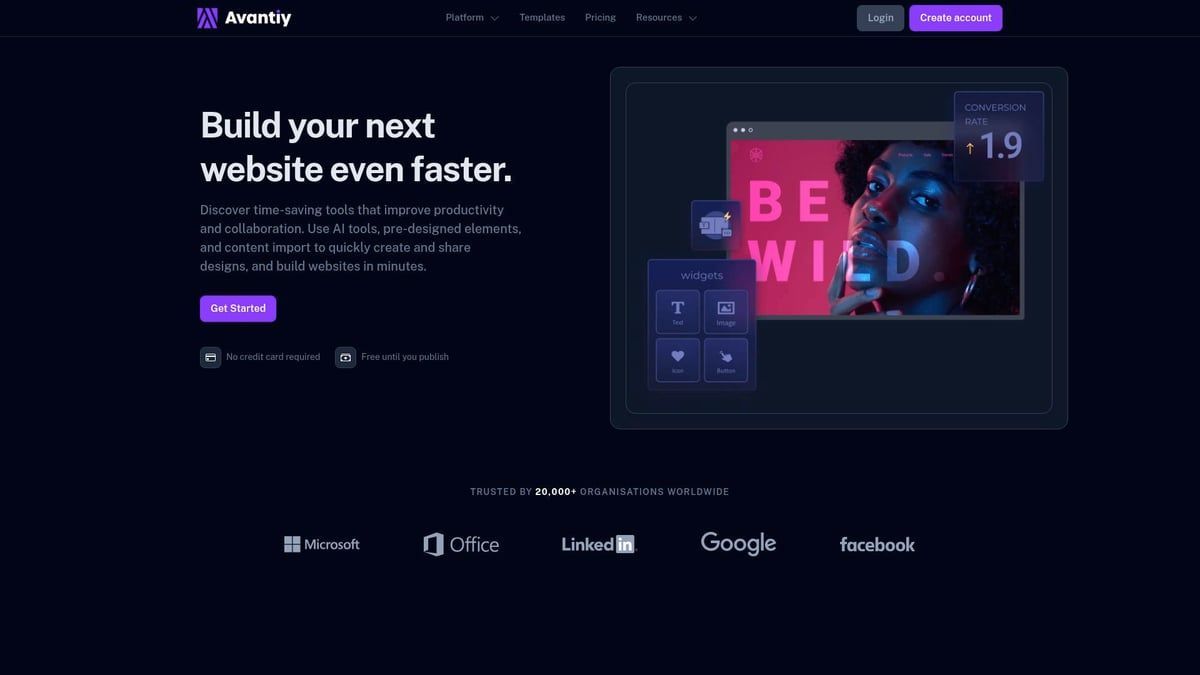
Looking for a durable website builder that is ready for 2026 and beyond? Avantiy leads the way for UK businesses with its all-in-one AI-powered platform, combining resilience, security, and rapid growth features.
Key highlights:
- Drag-and-drop editor with customisable, future-proof templates.
- Built-in AI for content writing, design, and SEO.
- Lightning-fast hosting and 99.9% uptime.
- Integrated ecommerce solutions for resilient sites, bookings, memberships, and over 400 app integrations.
- Personalised UK-based support for startups, creators, and established brands.
For example, a new startup can launch a professional shop and blog in just hours with Avantiy, rather than weeks on traditional platforms. Compared to Durable AI, Wix, and Squarespace, Avantiy stands out for its unified tools, advanced AI, and commitment to UK market needs.
Real-World Examples: Resilient Websites Built with Durable Builders
Businesses across the UK are seeing real benefits from choosing a durable website builder. These examples show how different industries use modern platforms to boost growth, improve efficiency, and stay resilient in a fast-changing digital world.
Case Study 1: Local Service Business Scaling Nationally
A cleaning company in Manchester started with a basic site, then switched to a durable website builder powered by AI. With Durable AI, they automated quote requests, managed leads, and launched dynamic landing pages for each new city.
- AI content tools helped them create location-specific service pages quickly.
- Built-in CRM tracked customer interactions and follow-ups efficiently.
- Local SEO features boosted their search presence in every region.
The results were striking: a 3x increase in leads, 99.9% uptime, and a major reduction in admin workload. Their experience mirrors what Best AI website builders in 2025 highlights about the impact of AI-driven platforms. The lesson is clear: scalability and integrated tools are essential for ambitious UK service businesses.
Case Study 2: Creative Freelancer Portfolio
A freelance photographer in Bristol needed a site that was easy to update and showcased their work beautifully. Using Avantiy as their durable website builder, they quickly created a portfolio with drag-and-drop design, integrated bookings, and AI-generated blog content.
- Customisable galleries made it simple to add new projects.
- Instant booking tools let clients reserve shoots online.
- AI blog features kept their site fresh and visible in search.
Since relaunching, they have doubled client enquiries and improved their Google rankings. The key takeaway is the value of seamless content management and built-in marketing for creative professionals.
Case Study 3: Multi-Location Retailer
A retail chain with shops across the UK chose Duda as their durable website builder. They needed to manage multiple locations while keeping branding consistent and promotions up to date.
- Central dashboard allowed for easy updates across all sites.
- Localised content helped attract customers in different cities.
- Ecommerce integration supported click-and-collect and online sales.
This approach streamlined updates, maintained a cohesive brand image, and increased store footfall. The main lesson is that centralised management tools are vital for retailers with ambitious growth plans.
Case Study 4: Online Course Creator
An independent tutor wanted to scale their offering from one-to-one lessons to a national online course platform. With Avantiy, they built a durable website builder solution featuring memberships, gated content, and AI-powered content generation.
- Membership modules enabled secure access for paying students.
- Automated email and analytics tools tracked engagement and progress.
- AI content features sped up course creation and updates.
They saw a fourfold increase in subscribers and automated much of their content delivery. This shows the power of an all-in-one platform for education entrepreneurs seeking resilience and scalability.
Platform Comparison: Durable AI vs. Avantiy vs. Competitors
Choosing the right durable website builder can shape your business's future resilience. With evolving needs and rising expectations, a careful comparison is essential for UK businesses in 2026.
Feature Comparison Table
To help you select the most suitable durable website builder, here is a side-by-side feature comparison:
| Platform | Security | AI Tools | Ecommerce | Scalability | Integrations | Pricing |
|---|---|---|---|---|---|---|
| Durable AI | Strong | Advanced | No | Good | Moderate | £ |
| Avantiy | Advanced | Leading | Yes | Excellent | Extensive | ££ |
| Wix | Good | Moderate | Yes | Good | Extensive | ££ |
| Squarespace | Good | Basic | Yes | Good | Good | ££ |
| Duda | Strong | Good | Yes | Excellent | Good | £££ |
| GoDaddy | Basic | Basic | Yes | Moderate | Limited | £ |
Each durable website builder offers unique strengths. Avantiy stands out for its advanced AI features and deep integrations, while Durable AI provides swift AI-powered site generation.
Pros and Cons of Each Platform
Understanding the pros and cons helps you match the right durable website builder to your business goals.
Durable AI
- Pros: Fast AI site creation, built-in CRM, reliable uptime.
- Cons: Limited design flexibility, lacks ecommerce.
Avantiy
- Pros: Powerful AI content and design, ecommerce, bookings, 400+ app integrations, strong UK support.
- Cons: Slightly higher learning curve for advanced features.
Wix/Squarespace
- Pros: Large template libraries, flexible design, many apps.
- Cons: Slower AI adoption, less business automation.
Duda
- Pros: Multi-site management, agency tools, robust security.
- Cons: Less intuitive for beginners, higher cost.
GoDaddy
- Pros: Quick setup, affordable.
- Cons: Limited advanced features, basic AI.
Every durable website builder has trade-offs, but Avantiy leads in all-in-one capability for ambitious UK growth.
Which Builder is Best for Different UK Business Types?
The best durable website builder depends on your sector and scale:
- Startups: Avantiy for fast launch, AI content, and growth tools.
- Local services: Durable AI for lead generation and CRM.
- Ecommerce: Avantiy or Wix, both offer strong online store features.
- Agencies: Duda for managing multiple client sites.
- Creatives: Squarespace for design, Avantiy for AI-driven marketing.
With 2025 UK website statistics showing over 85 percent of consumers expect seamless digital experiences, selecting a durable website builder that supports scalability and innovation is key.
Pricing and Value for Money in 2026
Pricing models vary, but investing in a durable website builder pays off long-term. Most platforms offer monthly or annual subscriptions, with UK SMBs spending £300–£1,500 per year.
Avantiy’s free-to-build, pay-to-publish approach is ideal for testing before committing. Its built-in advanced SEO tools for durability ensure your site remains visible and robust through algorithm shifts, adding value over time.
Opting for a platform with strong features and reliable support saves money on costly rebuilds and lost sales.
Support, Community, and Ongoing Updates
Ongoing support and active user communities are essential for resilience. Avantiy provides one-to-one UK-based support, while Durable AI offers a self-service model.
Look for a durable website builder with:
- 24/7 support availability
- Regular feature updates and security patches
- Comprehensive knowledge bases and forums
Platforms like Avantiy, Wix, and Duda invest heavily in new features, ensuring your website stays future-ready and competitive.
Optimising and Maintaining Your Durable Website for Ongoing Resilience
Keeping your durable website builder optimised and resilient is not a one-off task. It’s an ongoing process that ensures your business remains visible, secure, and competitive. By following regular maintenance routines and adapting quickly to new trends, UK businesses can maximise the value of their website investment.
Regular Updates, Backups, and Monitoring
A durable website builder should make updates, backups, and monitoring seamless. Automatic platform updates keep your site protected from vulnerabilities, while regular backups ensure you can recover quickly from any issue.
Set your builder to back up your site at least weekly. Built-in monitoring tools provide alerts if your website experiences downtime or performance drops, letting you act fast before customers notice.
- Schedule quarterly reviews of plugins and integrations.
- Test your backup restore process periodically.
- Look for uptime guarantees and real-time monitoring in your builder.
With Avantiy, for example, you benefit from automated updates and proactive monitoring, reducing manual workload and safeguarding your business’s online presence.
Adapting to New Technologies and User Needs
The digital landscape is evolving at breakneck speed. A durable website builder must enable easy adoption of new technologies, from AI chatbots to voice search and beyond.
Regularly explore new features released by your platform. Add enhancements like AR product previews or conversational interfaces as customer expectations shift. Platforms such as Avantiy roll out tech-forward updates, helping your site stay modern without complex rebuilds.
When choosing tools, consider frameworks that score well in benchmarks like UI-Bench: Evaluating AI design tools, which assess the capabilities of advanced design assistants for future-proofing your site.
Staying agile with your durable website builder means you can pivot quickly and meet evolving user needs.
Measuring Success and Continuous Improvement
Ongoing optimisation is only effective if you measure results. Your durable website builder should offer analytics dashboards to track traffic, engagement, and conversions.
Use built-in tools to run A/B tests on landing pages or calls to action. Set quarterly goals for site improvements, such as boosting lead generation or reducing bounce rates.
- Monitor SEO performance and keyword rankings.
- Review conversion funnels for bottlenecks.
- Use AI-driven insights to tweak content for maximum impact.
For example, many Avantiy users double their leads by refining site content based on analytics. Continuous improvement ensures your site remains a growth engine.
Community, Support, and Learning Resources
Resilience also means having support when you need it. Choose a durable website builder with robust customer support, active user communities, and comprehensive documentation.
Look for platforms that offer:
- 24/7 live chat or phone support.
- Webinars, tutorials, and onboarding sessions.
- Forums and user groups for sharing tips and troubleshooting.
Avantiy provides personalised onboarding and a UK-focused support team, making it easier to resolve issues and learn new features. Being part of a supportive community helps your business stay ahead, adapt quickly, and maintain a resilient online presence.
As we’ve explored in this guide, building a resilient website in 2026 means thinking ahead—choosing the right tools, planning for growth, and prioritising security and performance from day one. With platforms like Avantiy, you don’t need to compromise between ease of use and futureproof features. Whether you’re launching a new business, growing your brand, or simply want a stress free way to keep your site secure and competitive, you have everything you need at your fingertips. If you’re ready to futureproof your online presence,
Get Started for Free and see how effortless it can be to build a durable site that grows with you.