How to Build a Website: The Essential Guide 2026
In 2026, having a strong online presence is essential for anyone looking to succeed in the UK digital landscape. Whether you are launching a new business or building your personal brand, understanding how to build a website uk is the first step towards growth and credibility.
This guide breaks down the process into clear, actionable steps tailored for UK audiences. You will find practical advice, the best tools, and comparisons of top website builders to help you make confident decisions.
We also cover essential legal and SEO requirements specific to the UK, so your website is not only beautiful but also compliant and visible.
Ready to create a modern, high-performing site? Let’s start your journey with expert insights and easy-to-follow guidance.
Planning Your Website: Goals, Audience & Structure
Planning is the foundation of every successful website. If you want to know how to build a website uk that truly delivers results, start with a clear vision and strategy. This section will walk you through each crucial step in mapping out your project for the UK market.

Defining Your Website’s Purpose
Before you dive into how to build a website uk, define what you want to achieve. Are you launching an eCommerce shop, showcasing a portfolio, generating leads, or building a community? Each goal demands different features, such as product catalogues for shops or contact forms for service businesses.
Align your website’s structure and tools with your primary objective. For example, a photography portfolio benefits from image galleries, while a consultancy site needs booking forms and testimonials. Clarity at this stage shapes every decision ahead.
Understanding Your UK Audience
Knowing your audience is essential for anyone learning how to build a website uk. UK users are highly mobile, with Ofcom reporting that 88% of UK browsing now happens on smartphones. Consider the age, location, and needs of your visitors.
Accessibility and inclusivity are vital. Ensure your design supports users with disabilities, and that content is easy to read on any device. Meeting these expectations helps your site appeal to a broader UK audience.
Mapping Out Content & Structure
A well-organised structure is at the heart of how to build a website uk that users love. Begin by sketching a sitemap, listing your main pages and their hierarchy. Essential pages for UK sites include About, Services, Contact, and a Privacy Policy.
For a small business, a typical sitemap might look like:
- Home
- About Us
- Services
- Blog or News
- Contact
- Privacy Policy
Logical navigation ensures visitors find what they need quickly, improving their experience and boosting trust.
Competitor & Market Research
Analysing your competitors is a smart move for anyone learning how to build a website uk. Review top UK websites in your niche to spot content gaps and opportunities. Look for what they do well, and where you can improve.
Use tools like SEMrush, Ahrefs, or SimilarWeb to gather data on keywords, backlinks, and user engagement. This research can reveal trends and help you position your website more effectively in the UK market.
Branding & Visual Identity
Your brand makes a lasting impression. When you plan how to build a website uk, choose colours, fonts, and imagery that resonate with local audiences. UK brands like John Lewis and Monzo use consistent, recognisable styles to build trust.
Keep your messaging clear and unified across every page. A strong visual identity not only attracts visitors but keeps them engaged. Investing in distinctive branding sets your site apart from competitors.
Setting Budgets & Timelines
Careful budgeting is crucial when considering how to build a website uk. DIY website builders are popular for affordability, often costing between £100 and £500 to launch, while professional builds can range from £1,000 to £10,000.
Most UK small business sites take 2 to 6 weeks to complete, depending on complexity and resources. Planning ahead helps you allocate time and money wisely, avoiding surprises later on.
Choosing Domain Names & Hosting
Selecting the right domain is a key part of how to build a website uk. Aim for a memorable .co.uk or .uk domain that represents your brand and is easy to spell.
Choose a trusted UK-based hosting provider for faster load times and better local support. For those seeking a streamlined approach, an AI website builder UK can simplify setup, hosting, and ongoing management, making the process even more accessible.
Choosing the Right Website Builder or Platform
Selecting the best platform is a crucial step in how to build a website uk. With so many options, it is important to weigh usability, features, and long-term value for UK businesses. The right choice will influence every aspect of your online presence, from design flexibility to compliance and scalability.
Overview of Website Building Options
When considering how to build a website uk, you will encounter three main routes: DIY website builders, content management systems (CMS), and custom builds.
DIY website builders like Wix or Avantiy offer drag-and-drop interfaces, making them ideal for beginners or small businesses seeking speed and ease. CMS platforms such as WordPress provide more flexibility but require technical skills for setup and customisation. Custom builds, though powerful, are best reserved for larger organisations with unique needs and bigger budgets.
Each approach has its pros and cons. DIY builders are quick and affordable. CMS gives you control and scalability. Custom builds deliver uniqueness but demand investment and ongoing maintenance. Choosing the right path depends on your goals, skills, and resources.
Comparing Top Website Builders in the UK
Finding the right platform is central to how to build a website uk. The UK market is dominated by several leading builders, each with distinct strengths.
| Platform | Ease of Use | UK Support | eCommerce | Price Range | Notable Features |
|---|---|---|---|---|---|
| Wix | Very Easy | Yes | Yes | £ | App market, templates |
| Squarespace | Easy | Yes | Yes | ££ | Elegant design, blogging |
| Shopify | Easy | Yes | Excellent | £££ | Advanced eCommerce tools |
| GoDaddy | Very Easy | Yes | Good | £ | Fast setup, domain deals |
UK data shows that 65% of small businesses use DIY builders for their sites (TechUK, 2025). Platforms like Wix and Squarespace appeal to those who want a stylish site without code. Shopify is the go-to for online shops, especially with UK payment integrations. GoDaddy suits those who want a quick launch, while Duda is popular with agencies.
Avantiy: The UK’s All-in-One AI Website Builder
Avantiy is redefining how to build a website uk by combining AI-powered simplicity with robust features. Its drag-and-drop builder makes it possible for anyone to create a professional site, no coding required.
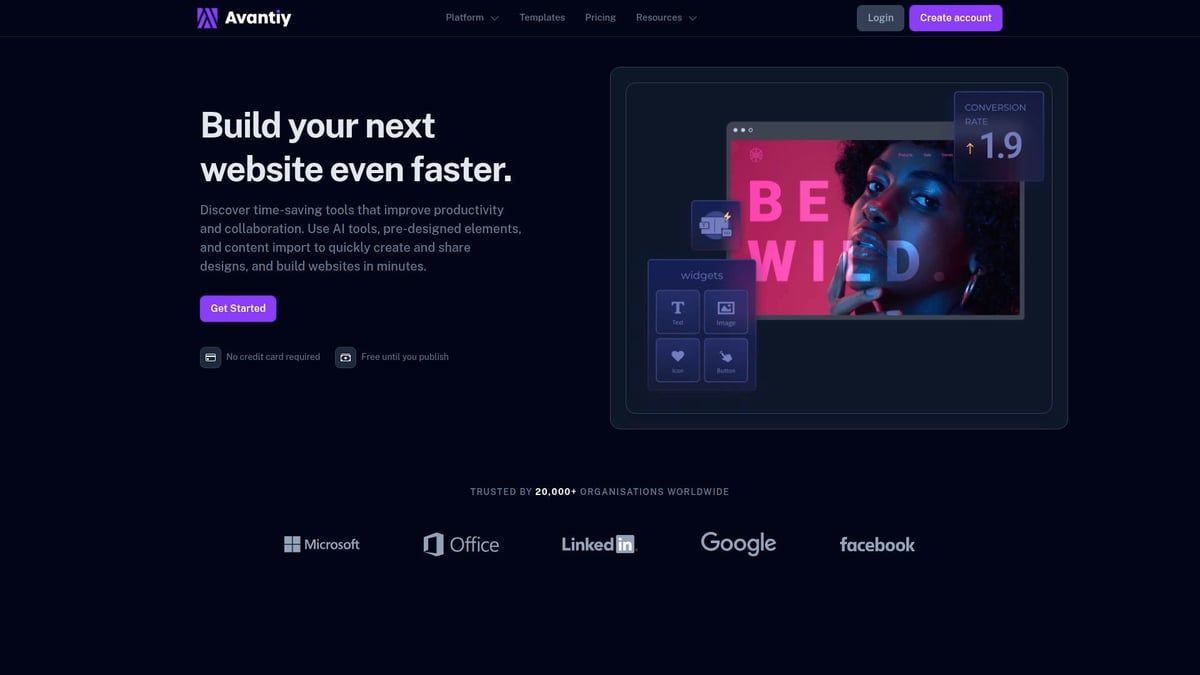
You can access a library of customisable templates designed for UK businesses. For inspiration and options, see the website templates for UK businesses page. Avantiy also provides built-in SEO, eCommerce, booking, and membership tools, along with over 400 app integrations, AWS hosting, free SSL, and unlimited bandwidth. You only pay when you publish, and UK-based support guides you every step of the way.
For those seeking a fast, future-ready solution that meets local requirements, Avantiy is a smart choice.
Open Source & Bespoke Options
Open source platforms like WordPress, Joomla, and Drupal offer unmatched flexibility for how to build a website uk. They are ideal for those comfortable with plugins, themes, and some coding. However, you will need to manage hosting, updates, and security.
Bespoke development is worth considering for complex, unique needs. This route delivers tailored functionality but comes with higher costs and longer timelines. Ongoing maintenance, security, and scalability must be factored in for both open source and custom solutions.
Key Selection Criteria for UK Users
To make the right decision for how to build a website uk, consider:
- UK-based hosting for speed and data protection
- GDPR compliance for user trust and legal requirements
- Integration with UK payment gateways (Stripe, PayPal, Klarna)
- Scalability to support future growth
- Access to ongoing UK-based support
- Platform flexibility for add-ons and integrations
For example, a law firm may need secure document storage and compliance, while an eCommerce startup will prioritise payment options and easy product management.
Cost, Scalability & Future-Proofing
When planning how to build a website uk, review costs beyond the initial setup. DIY builders often have transparent pricing, but watch for upgrade fees and transaction charges. CMS and custom builds may have lower starting costs but require technical investment.
Choose a platform that can grow with your business. Assess whether you can easily add features, handle more traffic, and stay secure as digital trends change.
Step-by-Step: Building Your Website (Design to Launch)
Building a professional online presence in 2026 is easier than ever. If you want to know how to build a website uk, follow this step-by-step guide. Each stage below is tailored for UK businesses and individuals, with practical advice and the latest best practices.

Step 1: Registering Your Domain & Setting Up Hosting
The first step in how to build a website uk is securing your domain name. Choose a .co.uk or .uk domain for local credibility. Use reputable UK registrars to ensure compliance and support.
Select a UK-based hosting provider for faster site speeds and reliable support. Look for features like free SSL certificates, daily backups, and privacy protection.
SSL is essential for user trust and GDPR compliance. Before moving on, verify that your domain and hosting are both active and secure.
Step 2: Selecting & Customising a Template
Once you have hosting, pick a responsive template that fits your brand. Most UK users browse on mobile, so choose a design that looks great on all devices.
Avantiy offers UK-tailored, AI-powered templates that are easy to customise with no coding. Alternatively, platforms like Wix and Squarespace provide a range of options, but compare for UK-specific features.
Edit colours, fonts, and layout to match your identity. Test the template for accessibility, ensuring it works for all visitors—a key step in how to build a website uk.
Step 3: Creating Core Pages
Every UK website needs a set of core pages: Home, About, Services, Contact, and Privacy Policy. These are essential for user navigation and legal compliance.
Include clear calls to action and make your contact details visible. For UK businesses, display your company registration and VAT number where required. Add a cookie notice and GDPR-friendly privacy policy.
This structure is a foundation of how to build a website uk that meets both legal and user needs.
Step 4: Adding Content & Media
Write original, engaging copy that speaks to your UK audience. Use clear headlines, concise paragraphs, and local spelling. Make sure your content is SEO-friendly, using relevant keywords without stuffing.
Use high-quality images and videos to bring your site to life. Look for UK stock photo sources or create your own visuals.
AI content tools can help, but always review for authenticity. Quality content is central to how to build a website uk that stands out.
Step 5: Configuring Features & Integrations
Enhance your site by adding essential features. If you need eCommerce, booking, or memberships, choose a builder that offers these out of the box. Avantiy provides built-in tools for UK payments, booking, and subscriptions.
Integrate with Stripe, PayPal, or Klarna for local payment options. Set up email marketing and analytics to track user behaviour.
Easy integrations are a major advantage in how to build a website uk, saving time and future-proofing your growth.
Step 6: Search Engine Optimisation (SEO) Basics
Optimise your site for UK search engines from the start. Add unique titles, meta descriptions, and headings for each page. Use local keywords and set up Google My Business for local visibility.
Implement local schema markup to help search engines understand your business. For a step-by-step checklist and more advice, refer to these SEO tools and tips UK.
Effective SEO is vital in how to build a website uk that attracts local traffic and grows your business.
Step 7: Testing, Launch & Post-Launch Checks
Before launch, test your website on multiple browsers and devices. Check for broken links, typos, and layout issues. Optimise site speed and compress images for faster loading.
Review your pre-launch checklist: legal pages, security settings, and analytics tracking. Announce your launch with a press release, social media posts, or email to your UK audience.
Thorough testing and a strong launch plan complete your journey in how to build a website uk successfully.
Essential Legal, Security & Accessibility Requirements in the UK
Building trust and credibility online is non-negotiable for anyone learning how to build a website uk. Legal compliance, strong security, and accessibility are not just best practices, but essential requirements for any UK website owner. Understanding these pillars will protect your business, your visitors, and your reputation.

UK Website Legal Essentials
Every UK website must meet strict legal standards. This includes displaying a clear privacy policy, providing visible cookie consent, and listing accurate business information such as company registration and address. Failing to comply with GDPR can result in severe penalties, with fines reaching up to £17.5 million or 4% of annual turnover.
For a comprehensive breakdown of what’s required, visit this guide on GDPR compliance for websites. It’s a must-read for anyone serious about how to build a website uk and avoiding costly mistakes. Regularly review your policies to keep up with evolving UK regulations.
Security Best Practices
Security is a cornerstone of any trustworthy website. For those researching how to build a website uk, start by ensuring your site uses an SSL certificate and always loads over HTTPS. This encrypts data and reassures visitors their information is safe.
Add secure payment processing if you handle transactions, and schedule regular backups to prevent data loss. Many UK-focused website builders, like Avantiy, simplify these steps by including SSL, automatic updates, and robust hosting as standard.
Accessibility Standards
Making your site accessible is both a legal and ethical responsibility when considering how to build a website uk. Follow WCAG 2.2 guidelines to ensure everyone, including users with disabilities, can navigate your site.
Key steps:
- Use descriptive alt text for all images
- Ensure keyboard navigation works smoothly
- Maintain strong contrast ratios for readability
Many UK brands lead by example, prioritising inclusive design from the start.
Data Protection & User Trust
Data protection is vital for building trust with your audience. When you learn how to build a website uk, make sure you collect, store, and process all user data lawfully. Display clear privacy and cookie policies, and use visible security badges to reassure visitors.
Only collect essential information and store it securely. Regularly update your security measures to stay ahead of emerging threats.
Handling Online Payments & eCommerce Regulations
If you plan to sell online, compliance is key. Your site must meet PCI DSS standards for secure payment processing. Understand UK-specific tax rules, VAT requirements, and offer transparent refund policies.
For a seamless experience, platforms like eCommerce website solutions UK provide built-in compliance tools, payment integrations, and automated VAT calculations. This helps you focus on growing your business, not paperwork.
Cookie Policies & Consent Management
Cookie compliance is a legal requirement in the UK. Implement a clear cookie banner that allows users to accept or manage preferences before tracking begins. Use trusted tools or plugins compatible with your website builder.
Regularly audit your cookies to ensure ongoing compliance. Staying proactive on this front is essential for anyone learning how to build a website uk.
Optimising & Growing Your Website in 2026
Optimising and growing your online presence is the next step in mastering how to build a website uk. With competition rising and digital habits evolving, a strategic approach ensures your site stands out, attracts UK visitors, and delivers measurable results. Let’s explore practical steps for long-term growth, from analytics and SEO to content, community, and future-proofing your platform.
Tracking Performance & Analytics
Understanding how your website performs is crucial for ongoing success. Start by setting up Google Analytics 4 and Search Console to monitor site traffic, user behaviour, and conversion rates. These tools provide valuable insights into what’s working and where improvements are needed.
Key metrics to track include:
- Total visits and unique users
- Bounce rate and time on site
- Conversion rates for key goals
- Device breakdown: mobile vs desktop
According to the UK website statistics 2025, mobile browsing dominates, so ensure your analytics segment data by device. Dive into UK-specific trends, such as regional traffic or popular landing pages, to tailor your strategy. Regularly reviewing analytics is a foundation of how to build a website uk that adapts and grows.
Advanced SEO Strategies for UK Sites
To stay ahead in search rankings, go beyond basic SEO. Focus on structured data and schema markup to enhance listings with rich snippets. Optimise for voice search by using conversational keywords and answering common UK queries directly on your pages.
Effective strategies include:
- Building reputable local backlinks and citations
- Implementing local business schema for better map visibility
- Targeting long-tail keywords relevant to your niche and location
For example, ranking for “best café in Manchester” means creating location-specific content and securing listings on local directories. Platforms like Avantiy simplify on-page SEO, but always review your site’s technical health for crawl errors or speed issues. Mastering these steps is vital in how to build a website uk for long-term visibility.
Content Marketing & Blogging
A robust content strategy is essential for engaging UK audiences. Develop a content calendar focused on local topics, industry news, and customer questions. Use AI tools for content ideation, but prioritise authentic, well-researched writing.
Content types to consider:
| Type | Purpose | UK Example |
|---|---|---|
| Blog posts | Drive organic traffic | “UK tax tips for SMEs” |
| Guides | Establish authority | “How to build a website uk” |
| Case studies | Build trust with prospects | “Avantiy client success” |
| Videos | Boost engagement | Product demos |
Guest posting and digital PR can secure valuable backlinks and increase domain authority. Regular blogging also signals freshness to search engines, supporting your efforts in how to build a website uk that ranks and converts.
Social Media & Community Building
Social media is a powerful tool for reaching and retaining UK customers. Choose platforms that align with your audience, such as Facebook for community groups, Instagram for visual brands, and LinkedIn for B2B connections.
Tips for effective social growth:
- Integrate social feeds and sharing buttons on your site
- Encourage user-generated content and reviews
- Build and segment your email subscriber list
UK digital trends show increasing engagement on social platforms, as highlighted in the Digital 2025 UK report. Foster an active online community by responding promptly to comments and messages. This is another key aspect of how to build a website uk with a loyal following.
Scaling with eCommerce & Memberships
Ready to grow your revenue? Expand your site with eCommerce, digital downloads, or membership features. Platforms like Avantiy, Shopify, and Wix offer built-in tools for adding products, managing bookings, and handling subscriptions.
Consider these scaling strategies:
- Upsell and cross-sell related products
- Offer gated content or exclusive memberships
- Use analytics to refine product offerings
Avantiy excels with seamless integrations for UK payment gateways and unlimited bandwidth, making it a smart choice for businesses planning to scale. Ensuring your platform can handle increased demand is crucial in how to build a website uk that supports sustainable growth.
Ongoing Maintenance & Support
Websites require regular care to remain secure and effective. Schedule routine updates, backups, and security checks. Use automated tools to monitor uptime and performance, and review your site for outdated content or broken links.
Maintenance checklist:
- Update plugins and software monthly
- Back up your site weekly
- Test forms and checkout processes regularly
- Review analytics and set new goals quarterly
Access to UK-based support, like Avantiy’s dedicated onboarding, is invaluable for troubleshooting and guidance. Sometimes, a full website refresh is needed to stay current with design and user expectations. Long-term commitment to maintenance is the final step in how to build a website uk that thrives in 2026 and beyond.
Now that you've explored the essential steps for building a successful website in the UK, from planning and design to legal requirements and SEO, it's clear that getting started doesn't have to feel overwhelming. With tools like Avantiy, you can bring your ideas to life with ease, whether you're launching an online store, portfolio, or booking platform. You don't need coding experience or weeks of development – just a vision and the right support. If you're ready to put these insights into action and create a professional website that stands out,
Start Building Your Website Today.
Start building your new website today
No credit of debit card required start building today