Build a Website Using AI: The Essential Guide for 2025
AI website builders are shaking up the web design world in 2025. More people than ever are turning to these smart tools to launch their online presence. The reason? Traditional website building used to be slow, costly, and filled with technical hurdles.
Now, anyone can build a website using ai and create a stunning, high-performing site in record time. No coding or design expertise is needed. AI takes care of the heavy lifting, making professional websites more affordable and accessible.
This essential guide will walk you step-by-step through the process. You will discover the best tools, smart strategies, and proven practices to get your site live and thriving.
Whether you are an entrepreneur, freelancer, or business owner, this guide is for you. We will cover everything from AI website builder basics and planning, to design, content, SEO, and the future of AI-driven web creation.
Understanding AI Website Builders in 2025
Artificial intelligence is changing the way we build a website using ai. In 2025, AI website builders are making web design faster, smarter, and more accessible for everyone. Whether you are a business owner or a creative professional, these tools offer a powerful new approach to launching a modern digital presence.

What Is an AI Website Builder?
An AI website builder is a platform that uses artificial intelligence to simplify and automate the process to build a website using ai. Unlike traditional website builders, these platforms leverage machine learning, natural language processing, and generative design to create websites with minimal manual input.
Top AI website builders in 2025 include names like Wix ADI, Bookmark, and Avantiy. These tools analyze user goals and content, then generate tailored layouts, color schemes, and even copy. The result is a streamlined experience for users seeking to build a website using ai.
Key Benefits of Using AI for Website Creation
Choosing to build a website using ai brings a host of advantages. Most notably, site creation times drop from weeks to just hours. No coding or design expertise is needed, as the AI handles layout, branding, and even content generation.
AI website builders also offer:
- Cost savings compared to hiring agencies.
- Built-in SEO and responsive design.
- Automatic accessibility features for better inclusivity.
- Personalization, such as dynamic content and user journey optimization.
For many, these benefits make it far easier to build a website using ai and compete online.
Popular Use Cases and Industries
People from all walks of life now build a website using ai for a variety of projects. E-commerce businesses launch AI-generated online stores with product listings and payment systems. Freelancers and creatives design personal portfolios and blogs in minutes.
Other common use cases include:
- Small business websites with service booking.
- Membership platforms for communities.
- Agencies creating dynamic landing pages for clients.
The flexibility to build a website using ai appeals across industries, from retail to education.
Limitations and Challenges of AI Website Builders
Despite the benefits, there are still some challenges when you build a website using ai. Customization can be limited, especially for highly unique or branded designs. Sometimes, AI-generated content may sound repetitive or generic unless you review and refine the output.
Other limitations include:
- Security and privacy considerations for sensitive data.
- Integration gaps with niche third-party tools.
- Dependence on the platform's ongoing AI updates.
Understanding these challenges is key when deciding how to build a website using ai for your unique needs.
Market Trends and Adoption Statistics
The market for AI website builders is experiencing explosive growth. According to recent AI website builder market growth statistics, over 60% of new small business websites are expected to use AI builders by the end of 2025. The market size is projected to reach $5 billion by 2026.
User satisfaction rates continue to rise as more businesses choose to build a website using ai, driven by faster launch times and lower costs. Case studies highlight increased engagement and improved user experience.
How AI Website Builders Are Evolving
AI website builders are continuously improving. Platforms now learn from user feedback to enhance recommendations and site performance. Integration with voice, AR/VR, and IoT technologies is expanding, opening new possibilities for immersive web experiences.
Support for multilingual and global websites is also increasing, as AI tools become more sophisticated. The future looks bright for anyone looking to build a website using ai.
Planning Your Website: Goals, Audience, and Features
A successful journey to build a website using ai starts with a clear plan. Before jumping into design or content, it’s crucial to define what you want your site to achieve and how AI can support those goals. Careful planning ensures your site not only looks great but also serves your business objectives.

Defining Your Website’s Purpose
Every great website starts with a clear purpose. Are you looking to boost brand awareness, drive online sales, or showcase a personal portfolio? Maybe your aim is to generate leads or build a thriving community. When you build a website using ai, clarifying your objectives helps guide every decision, from design to content.
For example, an e-commerce store will focus on product pages and checkout flows, while a membership site prioritizes user sign-ups and engagement. Defining your purpose early lets AI tools tailor recommendations to your specific needs.
Identifying Your Target Audience
Understanding your audience is key to building a site that resonates. AI tools can help you analyze and define your ideal visitors by leveraging data and analytics. When you build a website using ai, these platforms can segment your audience by age, interests, location, and more.
With AI-driven insights, you can personalize user experiences, recommend relevant content, and even adjust site design for different demographics. This ensures your website speaks directly to the people who matter most to your goals.
Mapping Out Essential Features and Pages
Before you start to build a website using ai, outline the features and pages your visitors expect. Most sites need a Home, About, Services, Blog, and Contact page. Depending on your business, you might add a Shop, Booking, or Member Area.
AI-powered builders often suggest features based on your industry, saving time and ensuring nothing crucial is missed. Make a checklist of must-have pages and brainstorm interactive elements like forms, chatbots, or galleries to boost engagement.
Choosing the Right AI Website Builder for Your Needs
With so many tools available, comparing AI website builders is essential. Consider ease of use, template variety, AI capabilities, integrations, and pricing. Free plans are great for exploring, but premium options might unlock advanced features.
Look for platforms that offer seamless integration with marketing tools, analytics, and e-commerce modules. To stay ahead of the curve, review AI website builder market trends and analysis for insights into the latest features and industry leaders. This makes it easier to build a website using ai that grows with your business.
Setting a Realistic Timeline and Budget
AI dramatically accelerates the site-building process, turning what used to take weeks into just hours. When you plan to build a website using ai, factor in costs for add-ons, hosting, and premium features.
Set a realistic budget that covers both initial setup and ongoing expenses. Most AI builders offer transparent pricing, making it simple to forecast costs and avoid surprises down the line.
Preparing Content and Assets for AI Input
Gather your brand assets—logos, high-quality images, and existing copy—before you start to build a website using ai. This streamlines the process and helps AI generate cohesive layouts and content.
If you’re missing visuals or need fresh text, many AI builders can create on-brand images and copy for you. Upload your assets, set your preferences, and let the AI fill in the gaps, ensuring your website feels unique and professional.
Step-by-Step Guide: Building a Website Using AI in 2025
Ready to build a website using AI? This step-by-step guide will walk you through the process from creating your account to launching your site. Whether you are a beginner or a seasoned pro, these steps will help you harness the power of AI for fast, professional results.
Step 1: Signing Up and Setting Up Your AI Website Builder Account
The first step to build a website using AI is choosing your preferred AI website builder and registering an account. Most platforms offer a streamlined onboarding process. Simply provide your basic details, such as email and business name.
During signup, you will likely be asked to select your business category. This is critical, as AI uses this information to suggest relevant templates and features tailored to your goals. Take a moment to accurately define your business type and objectives.
You may also encounter a short survey. This helps the AI understand your preferences, industry, and website requirements. The more detailed your input, the better the AI can guide your journey.
By leveraging the latest platforms, you can join the growing number of users who are transforming web development with AI. According to AI in web development industry statistics, adoption rates are skyrocketing as businesses seek faster, smarter solutions.
Step 2: Selecting a Template or Starting from Scratch
Once your account is set up, the next step to build a website using AI is choosing your starting point. AI website builders typically offer a range of templates designed for various industries, such as e-commerce, portfolios, and blogs.
The platform’s AI will recommend templates based on your business type and goals. These suggestions are not random. They are generated using machine learning, which analyzes successful sites in your niche to predict what will work best for you.
If you prefer a blank canvas, most AI builders allow you to start from scratch. The AI can still assist by proposing layout structures, color schemes, and content blocks as you go.
Compare template options using a simple table:
| Template Style | Best For | Customization Level |
|---|---|---|
| Modern Portfolio | Creatives | High |
| E-commerce Grid | Online Stores | Medium |
| Minimal Landing Page | Startups/Services | High |
Choose the template that aligns with your vision, knowing you can always tweak it later.
Step 3: Using AI to Generate Content and Layouts
One of the biggest advantages when you build a website using AI is automated content creation. AI tools can generate headlines, product descriptions, bios, and more within seconds.
Start by entering brief prompts or keywords related to your business. The AI will produce draft content tailored to your audience. Review and refine these suggestions to ensure your brand voice shines through.
The layout is also optimized by AI. It analyzes best practices for user experience and arranges elements like menus, images, and calls-to-action for maximum engagement.
Consider this before-and-after example:
Without AI:
- Manually writes copy
- Spends hours arranging sections
- Risk of missing key features
With AI:
- Instant content drafts
- Smart layout suggestions
- Built-in SEO and accessibility
This step saves time and helps even non-writers create polished, engaging websites.
Step 4: Customizing Design Elements with AI Assistance
After your initial content and layout, it is time to personalize your site. To build a website using AI that truly reflects your brand, use the platform’s drag-and-drop editor, which is often enhanced by AI-driven suggestions.
AI can recommend color palettes that match your logo, pair fonts for readability, and even suggest image placements for visual harmony. As you make changes, real-time feedback helps maintain accessibility, ensuring your site is usable for everyone.
Personalization goes further with dynamic content. AI enables you to display unique messages or products based on visitor behavior, increasing the chance of conversions.
- Drag-and-drop editing for ease
- AI-suggested colors and fonts
- Real-time accessibility checks
- Dynamic, user-specific content
Experiment with different styles, knowing AI will guide you toward professional results.
Step 5: Adding Features and Integrations
To build a website using AI that meets your business needs, you will want to add features like forms, chatbots, booking systems, or e-commerce modules. The AI can suggest the most relevant apps and widgets based on your industry.
For online stores, AI will recommend inventory tools, payment gateways, and product galleries. If you are creating a blog, it may suggest comment sections and newsletter integrations.
Connecting your site to marketing tools, analytics, and social media is straightforward. Most platforms offer one-click integrations, streamlining the process so you can focus on growth.
- Forms and chatbots for engagement
- E-commerce and membership modules
- Social media and analytics integrations
This step ensures your website is functional and future-ready.
Step 6: Previewing, Testing, and Optimizing Your Site
Before you publish, it is essential to preview your website on different devices. AI-powered previews show how your site will look on desktops, tablets, and phones.
Automated checks help identify accessibility or SEO issues. The AI will flag slow-loading images, missing alt text, and broken links. Make adjustments based on these recommendations for a smoother launch.
Testing for speed, usability, and performance is built into most platforms. This step gives you confidence that your visitors will have a seamless experience.
Step 7: Publishing and Managing Your AI-Built Website
When you are ready to launch, publishing is as simple as clicking a button. AI builders handle domain setup and hosting, allowing you to go live in minutes.
After launch, AI-driven management tools help you monitor performance, run updates, and back up your site automatically. You will also get ongoing optimization tips to keep your website running smoothly.
To build a website using AI is not just about creation, but also about smart, hassle-free management.
Avantiy: An AI-Powered Website Builder for 2025
If you want to build a website using AI with ease, Avantiy is a top choice for individuals, startups, and growing businesses. Its intuitive drag-and-drop editor lets you customize templates without any coding.
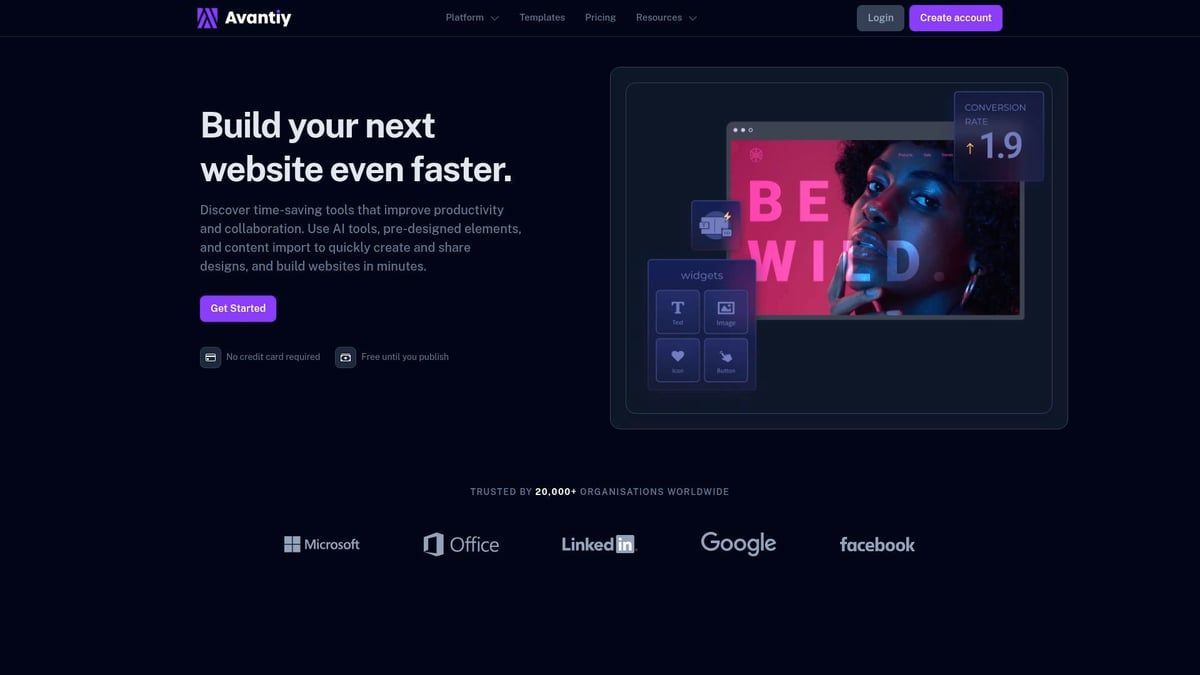
Avantiy’s AI design and content tools generate professional layouts and copy, while built-in SEO and fast hosting ensure your site performs well from day one. You can easily add eCommerce functionality, advanced marketing integrations, and more.
A free plan is available, making it easy to get started and scale as your business grows. With a global user base and industry-leading performance scores, Avantiy stands out as a reliable, innovative solution for 2025.
Designing and Personalizing Your AI Website
Designing and personalizing your site is where creativity meets cutting-edge technology. When you build a website using ai, you gain access to advanced tools that help your brand stand out while ensuring a smooth, engaging user experience.

Leveraging AI for Unique Visual Design
AI-driven website builders have transformed the way users approach visual design. When you build a website using ai, the platform can instantly suggest layouts, color palettes, and branding elements tailored to your business type and target audience.
For example, AI analyzes your content and industry to recommend:
- Layouts optimized for conversions
- Color schemes that align with your brand identity
- Font pairings for readability and style
The system provides real-time design adjustments based on current best practices, ensuring your site looks professional and modern. This intelligent guidance reduces the guesswork, helping you achieve a polished look without hiring a designer.
Personalization and User Experience Optimization
Personalization is a game-changer. With AI, you can build a website using ai that adapts content and features for every visitor. Dynamic elements, such as product recommendations and location-based offers, are automatically generated to match user preferences.
Consider these personalization strategies:
- User journey mapping to guide visitors toward key actions
- AI-powered popups or banners for targeted promotions
- Automated content adjustments based on browsing history
Personalized websites keep users engaged, boost conversions, and foster loyalty by making each visitor feel seen and valued.
Mobile Responsiveness and Accessibility
Mobile optimization is essential in 2025. AI automates mobile responsiveness, ensuring your website looks and functions perfectly on any device. As you build a website using ai, the platform checks layouts, font sizes, and images so they adapt seamlessly to smartphones and tablets.
Accessibility features are built in, with automatic checks for color contrast, alt text, and keyboard navigation. This not only helps you reach a wider audience but also improves your standing in Google's rankings by meeting Core Web Vitals standards.
Incorporating Multimedia with AI Assistance
Multimedia brings your website to life. AI-powered tools help you select, edit, and optimize images and videos for fast loading and maximum impact. When you build a website using ai, you can generate high-quality visuals even if you don't have your own media library.
Key features include:
- Automated image cropping and enhancement
- Video compression for faster page speeds
- Alt text generation for improved SEO and accessibility
By leveraging AI, your multimedia content looks professional and supports your website goals.
Maintaining Brand Consistency Across Pages
Consistency builds trust and recognition. AI-enforced style guides ensure your colors, fonts, and logos remain uniform on every page. As you build a website using ai, templates and design rules help prevent accidental deviations.
Keep in mind that while AI maintains alignment, there can be some customization limits. For a deeper dive into these challenges, see the United States AI website builder market challenges, which explores market-specific obstacles like customization and data privacy.
This automated consistency reassures visitors and strengthens your brand image.
Using AI for A/B Testing and Continuous Improvement
Continuous improvement is easy when you build a website using ai. AI-driven platforms run automated A/B tests, comparing different layouts, calls to action, and content variations. These insights help you make data-driven decisions that boost conversions and engagement.
Benefits include:
- Automated experiment setup and tracking
- Real-time analysis of user interactions
- Actionable recommendations for ongoing enhancements
With AI, your website evolves alongside your audience, staying relevant and effective.
AI Content Creation and SEO Best Practices for 2025
Creating high-quality content and mastering SEO are crucial when you build a website using ai. In 2025, AI tools have transformed how sites are written, optimized, and discovered online. Harnessing these innovations will help your website stand out, attract more visitors, and rank higher in search results.
AI-Generated Content: Pros, Cons, and Best Uses
AI-generated content is at the heart of efficient website creation. When you build a website using ai, these systems can write blogs, product descriptions, and landing page copy in seconds.
Pros:
- Fast content production
- Consistent tone and style
- Scales easily for multiple pages
Cons:
- May lack human nuance
- Risk of repetitive phrasing
- Requires human review for accuracy
The best approach is blending AI efficiency with your unique voice. Use AI to draft outlines, generate ideas, or fill in gaps, then refine to match your brand. Many top-performing sites in 2025 leverage this hybrid workflow.
Optimizing for Search Engines with AI Tools
Modern AI SEO tools simplify the process when you build a website using ai. These platforms analyze your site, suggest keywords, and optimize metadata automatically.
Key AI SEO Features:
- Real-time keyword research
- Automated meta tag generation
- Technical SEO checks (site speed, mobile readiness)
- Content structure recommendations
For example, AI can scan your competitors, recommend high-impact keywords, and even generate optimized title tags. This ensures your site is built for both users and search engines from day one.
Local SEO and Multilingual Capabilities
Expanding your reach is easier when you build a website using ai. AI-driven tools handle local SEO by generating business schema, integrating Google Maps, and optimizing for "near me" searches.
For global audiences, AI translation tools can create multilingual versions of your site. These tools preserve meaning and tone, making your content accessible worldwide. In 2025, many builders offer one-click translation and automatic locale detection.
Ensuring Content Originality and Avoiding Plagiarism
Originality is key if you want to build a website using ai and stand out. AI plagiarism checkers scan your content against billions of web pages to ensure uniqueness.
Best Practices:
- Always review AI-generated content before publishing
- Add your insights, stories, or data to each page
- Use built-in originality tools for peace of mind
This approach protects your reputation and improves SEO performance.
AI for Structured Data and Rich Snippets
Structured data helps search engines understand your website’s content. When you build a website using ai, many platforms automatically add schema markup for products, reviews, and FAQs.
Here’s an example of product schema in JSON-LD:
{
"@context": "https://schema.org/",
"@type": "Product",
"name": "AI Website Builder",
"description": "A tool to build a website using ai.",
"brand": "Avantiy"
}
Rich snippets like FAQs and reviews can boost your visibility and click-through rates.
Monitoring Performance and Analytics with AI
Tracking your website’s performance is critical. AI-powered analytics dashboards present real-time data on traffic, engagement, and conversions.
Analytics Features:
- Automated traffic reports
- Conversion tracking
- SEO improvement suggestions
These insights let you adjust your strategy quickly and keep your site competitive.
Staying Ahead: SEO Trends for AI Websites in 2025
The future of SEO is intelligent and adaptive. Voice and visual search are on the rise, so optimizing for conversational queries is essential.
AI now analyzes search intent, helping you refine content for what users really want. Staying updated with Google’s evolving algorithms will ensure your website remains visible and effective.
The Future of AI Website Building: Trends and Predictions
The future of how we build a website using ai is bright and fast-evolving. As AI matures, new trends are reshaping what's possible for web creators everywhere. Let's explore the most important predictions for 2025 and beyond.
AI-Driven Personalization and Hyper-Targeting
Personalization is the heart of the next wave in web design. When you build a website using ai, expect smarter algorithms that analyze visitor behavior in real time. This means sites can adjust layouts, recommend products, or change content based on each user's habits or preferences.
Imagine a homepage that greets visitors by name or a shop that highlights trending items for each region. These dynamic experiences will boost engagement and conversion rates for businesses of all sizes.
As AI grows more sophisticated, hyper-targeted content and offers will become standard features for most online platforms.
Integration with Emerging Technologies
Emerging tech is unlocking new ways to build a website using ai. Augmented reality (AR) and virtual reality (VR) are being integrated for immersive product demos and interactive tours.
Websites will soon connect seamlessly with IoT devices, such as smart speakers or wearable tech. Imagine booking a service through your watch or exploring a product in 3D from your phone.
These integrations will create richer, more interactive digital experiences that set brands apart in a crowded online world.
Autonomous Website Management and Smart Automation
When you build a website using ai, expect your site to manage itself more often. Predictive maintenance will help prevent downtime by spotting issues before they cause problems.
AI-powered sites will update content, plugins, and even designs automatically, ensuring everything stays current. Smart chatbots and automated customer support will offer instant help 24/7, raising user satisfaction.
Self-optimizing websites will analyze visitor data and make real-time tweaks, so your site performs at its best with less manual effort.
Democratization of Web Creation
The ability to build a website using ai is reaching more people than ever. No longer limited to coders or designers, AI tools are leveling the playing field for small businesses and entrepreneurs worldwide.
Case studies show local shops, artists, and startups launching stunning, professional sites in hours. AI helps with everything from logo design to content writing, making web creation truly accessible.
This democratization will empower a new generation of digital creators, driving innovation and diversity online.
Ethical Considerations and Responsible AI Use
As AI web builders become more powerful, ethical considerations grow in importance. Data privacy must be protected, and users should always know how their information is used.
Transparency in algorithms and avoiding bias are crucial for building trust. Regulatory trends are emerging, setting guidelines for responsible AI development.
Businesses need to prioritize ethical practices, ensuring AI-driven websites remain safe, fair, and transparent for all.
Preparing for the Next Generation of AI Website Builders
Looking ahead, the tools to build a website using ai will evolve rapidly. Expect smarter design assistants, even more automation, and deeper integrations with new tech.
To future-proof your site, stay informed about AI advancements and choose flexible platforms that can adapt. The next 3 to 5 years will bring innovations we can only begin to imagine.
The journey is just beginning, and those who embrace AI now will lead the web of tomorrow.
Now that you’ve seen how AI can simplify every part of building a website from planning and design to content and SEO you’re ready to put these ideas into action. Whether you want to launch a stunning portfolio set up an online store or grow your business presence online you don’t need coding skills or weeks of spare time. With tools like Avantiy’s intuitive drag and drop editor customizable templates and built in AI helpers you can have a professional site up and running in just a few hours. If you’re ready to take the next step
Get Started for Free and see how easy building your website with AI can be.
Start building your new website today
No credit of debit card required start building today